
Chicago’s Robert Burns Monument
Garfield Park, Chicago
Progress on the Robert Burns Statue Restoration
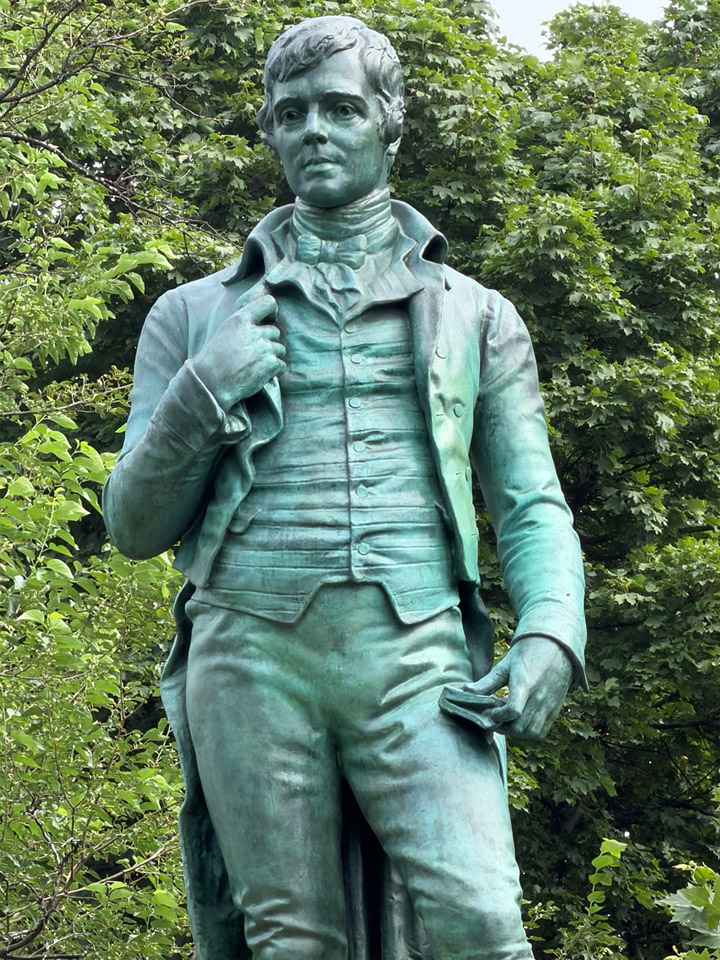
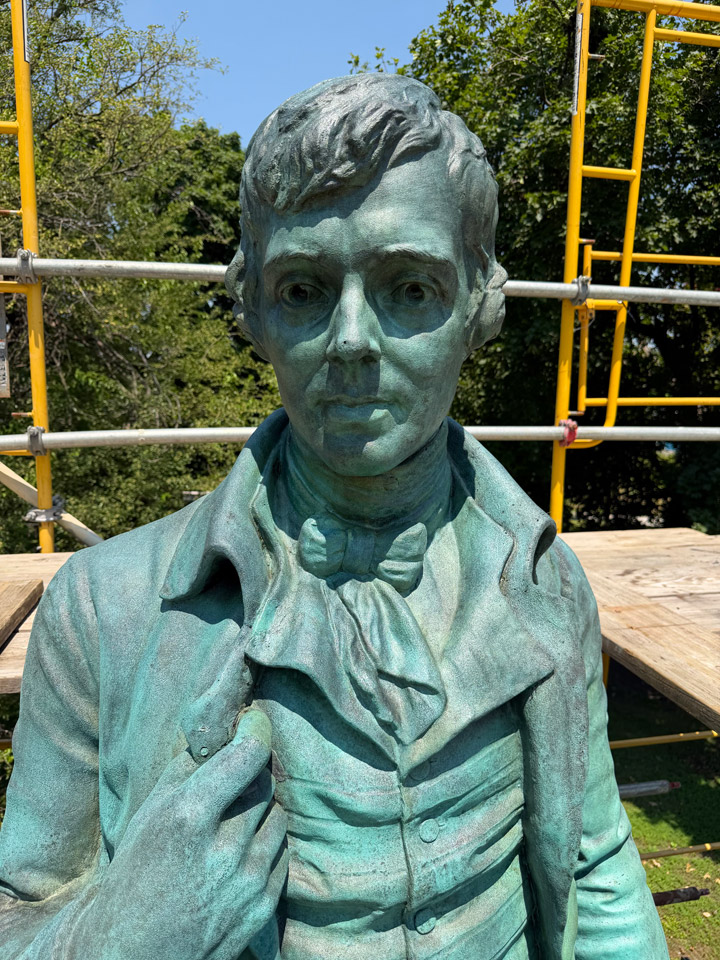
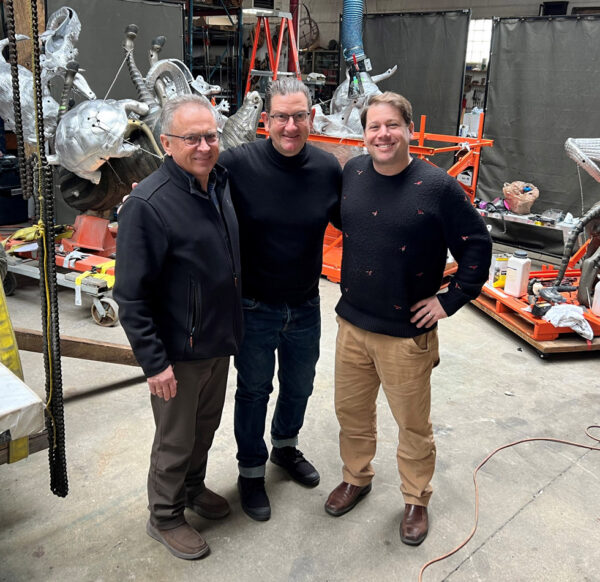
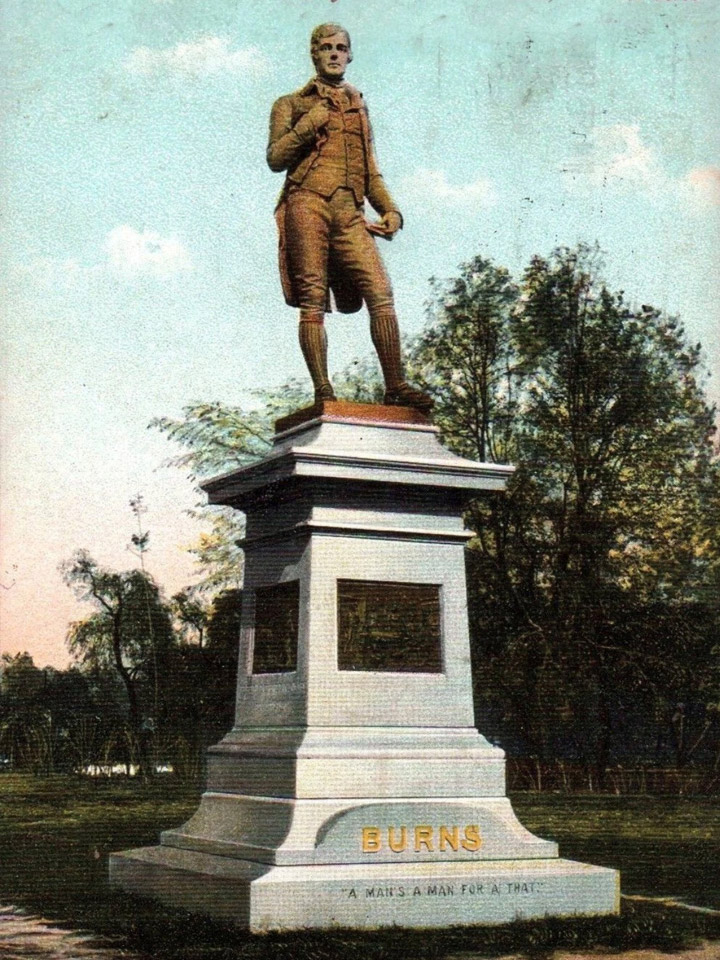
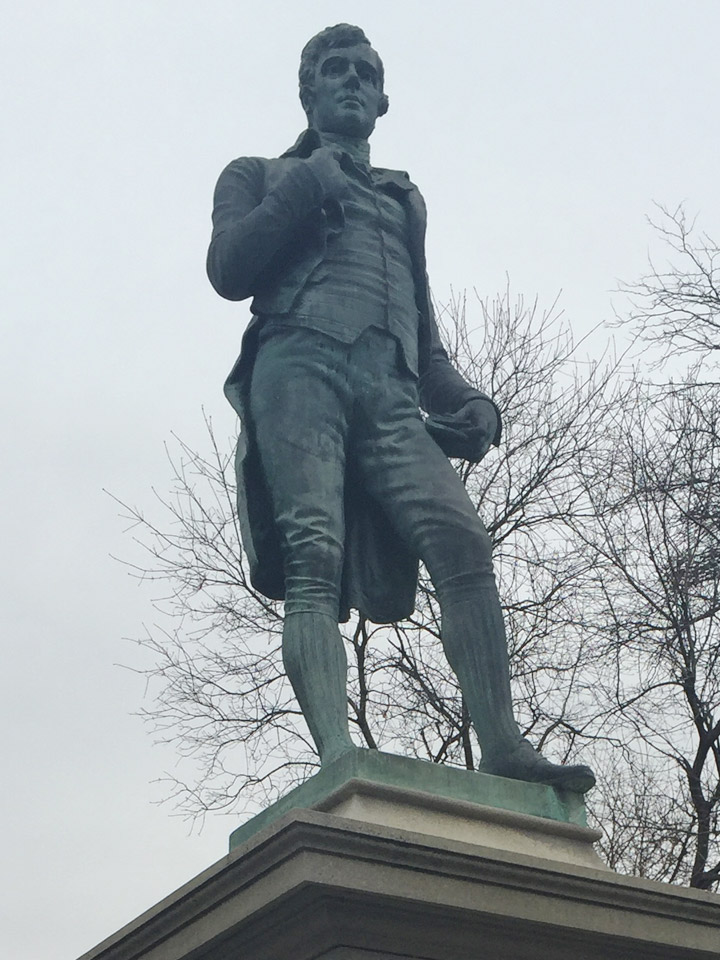
The Chicago Robert Burns Monument restoration is about much more than replacing what was lost. Acclaimed conservator and sculptor Andrzej Dajnowski is dedicated to faithfully observing sculptor William Grant Stevenson’s original artistic vision and ensuring the monument is restored as accurately as possible. Every detail is being carefully researched and crafted so that the 2026 restoration authentically reflects the monument’s original appearance in 1906. This includes replacing four bronze relief panels that were stolen about 100 years ago. Two of these panels are being recreated using historic photographs, archival documentation, and other period sources. The other two panels have already been cast by taking impressions from Grant Stevenson’s monument in Milwaukee. While Andrzej was in Milwaukee, he discovered something that hitherto we were unaware of – Grant Stevenson put a quill into Burns’ right hand. We had not realized that, as well as missing our four bronze relief panels, our Burns was missing his quill. Co-incidentally, we were recently given a box of our Scottish Society’s archival materials, photographs, papers and programs. Included was an original program from the 1906 dedication of the Burns monument. Tucked inside the program was an artist’s rendering of the statue. There, as clear as a bell, in his right hand, Burns is holding a quill.
As well as recreating the missing panels, Andrzej will recreate the quill and we will put a pen back into the hands of one of the world’s greatest writers!
Andrzej, and our friend and partner, Andrew Schneider, who heads up Chicago Park District’s Department of Historic Assets, share the Chicago Scots’ commitment to authenticity and accuracy. The work to recreate the quill and the two panels from scratch will take some time. We believe this historic restoration deserves to be celebrated once the work has been fully completed, allowing everyone the opportunity to experience the monument genuinely and exactly as William Grant Stevenson envisioned it. Once the restoration is complete, we look forward to inviting you to join us for a very important rededication ceremony. Watch this space!
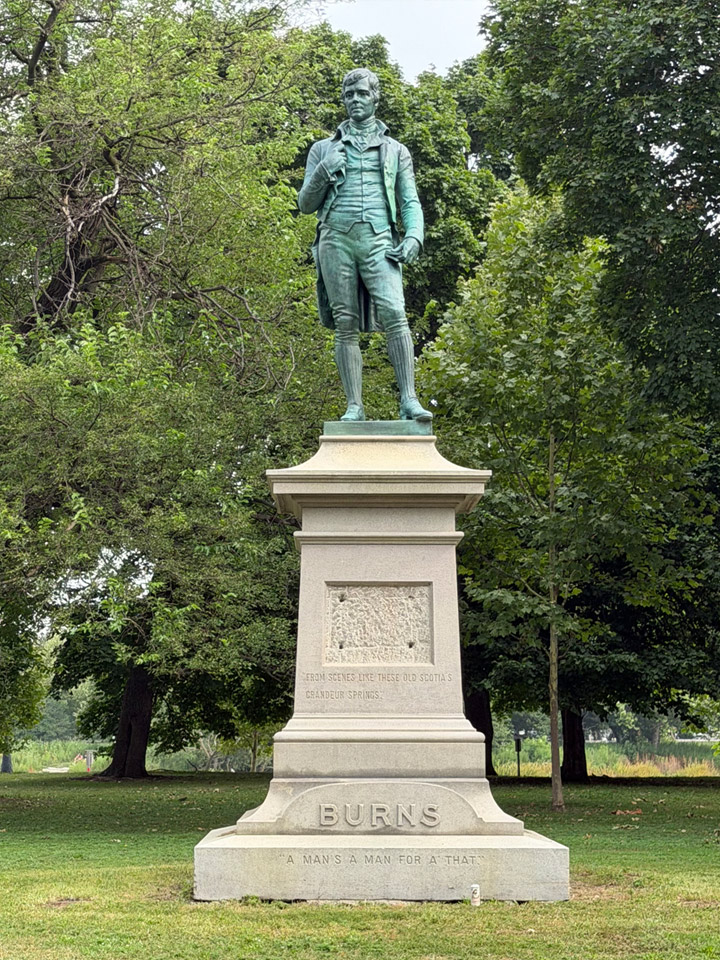
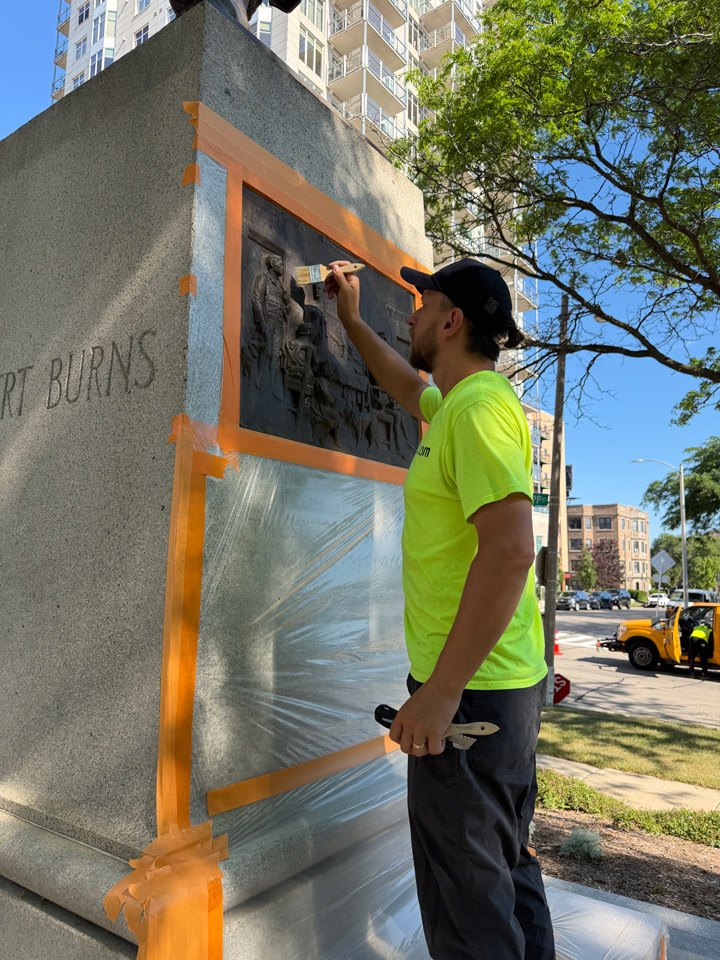
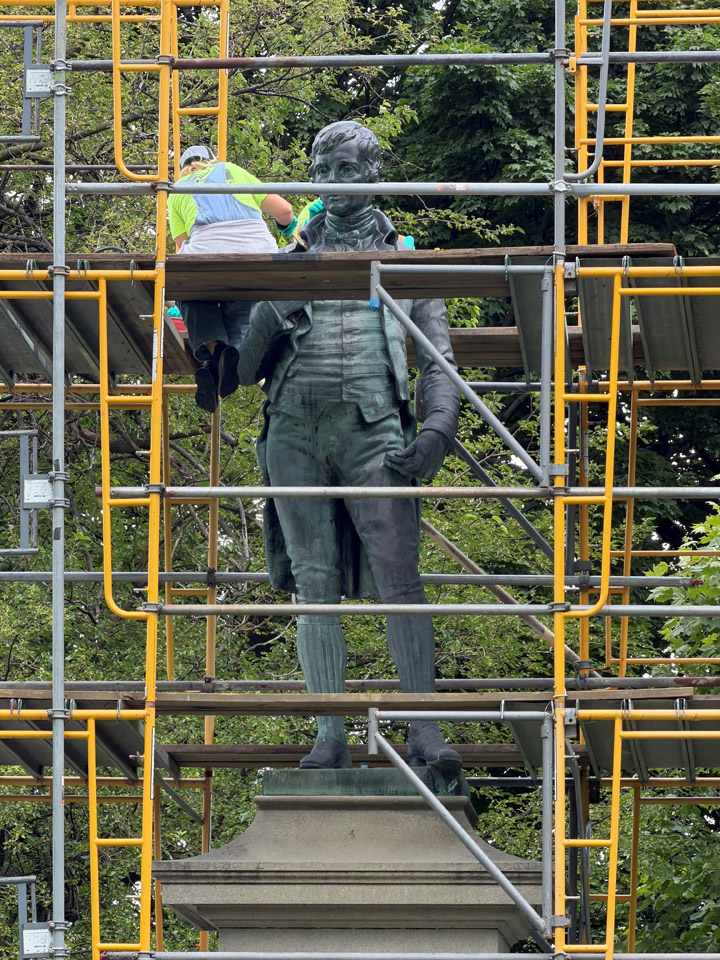
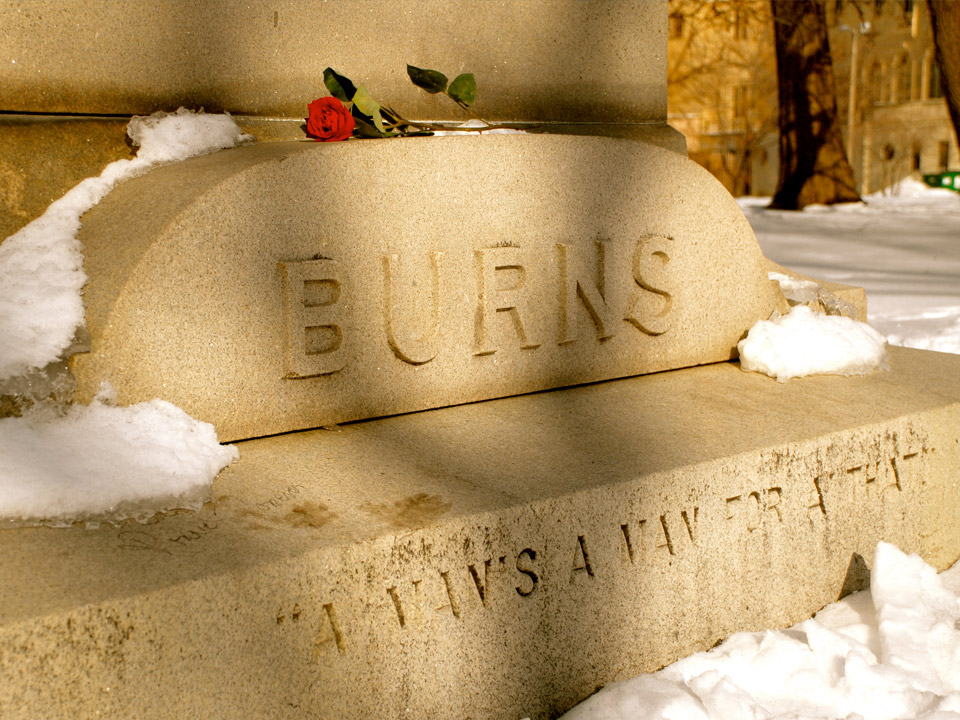
As you can see in the photos below, the Robert Burns monument patina cleaning process is complete. Andrzej Dajnowski, the artist leading this exciting project, is making casts of the bronze relief panels to replace the originals that adorned the granite pedestal upon which the statue stands. The originals were stolen and our monument has been missing them for a century. A link to Chicago Magazine’s profile of Andrzej is HERE.

We invite you to watch a video recording of our recent Scottish History Forum featuring a chat with Andrew Schneider, Chicago Park District’s Director of Historic Assets, who made the restoration project a reality.
“An Enduring Credit to the Scottish Americans of Chicago”
Thank you for your interest in the remarkable story of Chicago’s Robert Burns monument and its restoration, a collaborative project of the Chicago Park District Department of Historic Assets and the Chicago Scots.
The monument, by celebrated Scottish sculptor William Grant Stevenson, was given to the city as a gift from Chicago’s Scottish community 120 years ago. Located in Garfield Park, the monument was dedicated in 1906 in a ceremony of great pageantry. Take a moment to review the original Program of Dedication below.
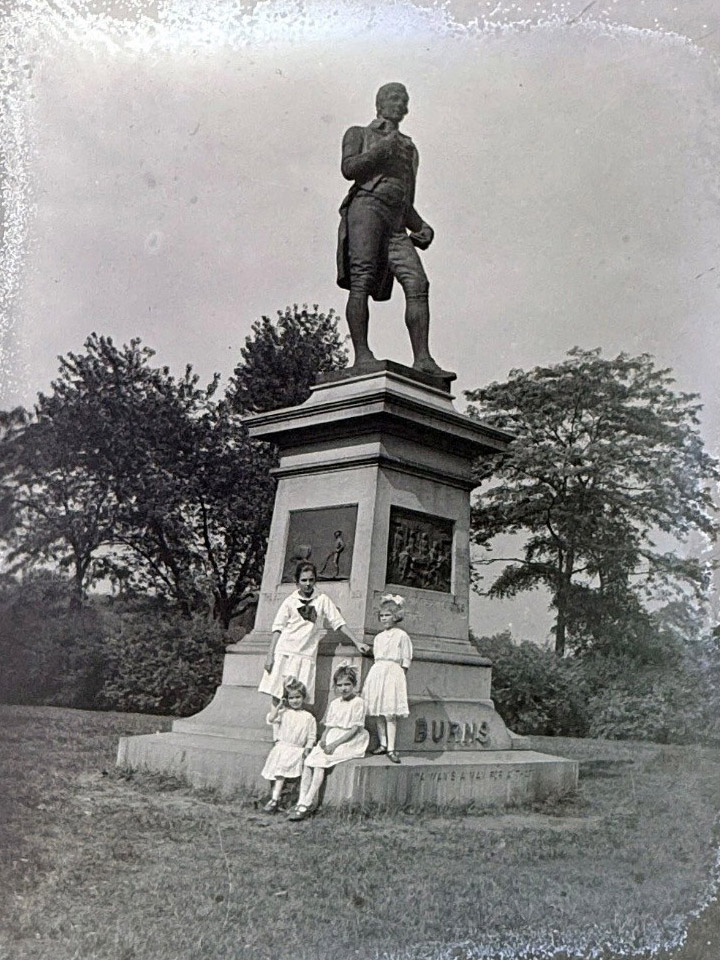
Unfortunately, in the intervening years, the four bronze reliefs that adorned each side of the monument’s granite pedestal were stolen. Those missing panels have been lamented by generations of Scots.
Serendipitously, Gus Noble OBE, president of Chicago Scots, received a call from Andrew Schneider, Head of the Chicago Park District’s Department of Historic Assets shortly before Robert Burns’ birthday on January 25th 2026. Andrew shared news that the park district had budgeted funds to restore the monument and recreate the missing relief panels over the summer. He asked if the Chicago Scots would be interested to help again and if we would assist with ongoing maintenance for the statue into the future. It was a heartfelt ‘yes’ from Gus who invited Andrew to officially announce the project at the Burns Tribute event at Martyrs’ Live. Click here to hear Andrew’s remarks.
Funding from our donors will supplement the park district’s budgeted restoration and fund ongoing annual maintenance. Click here to donate.
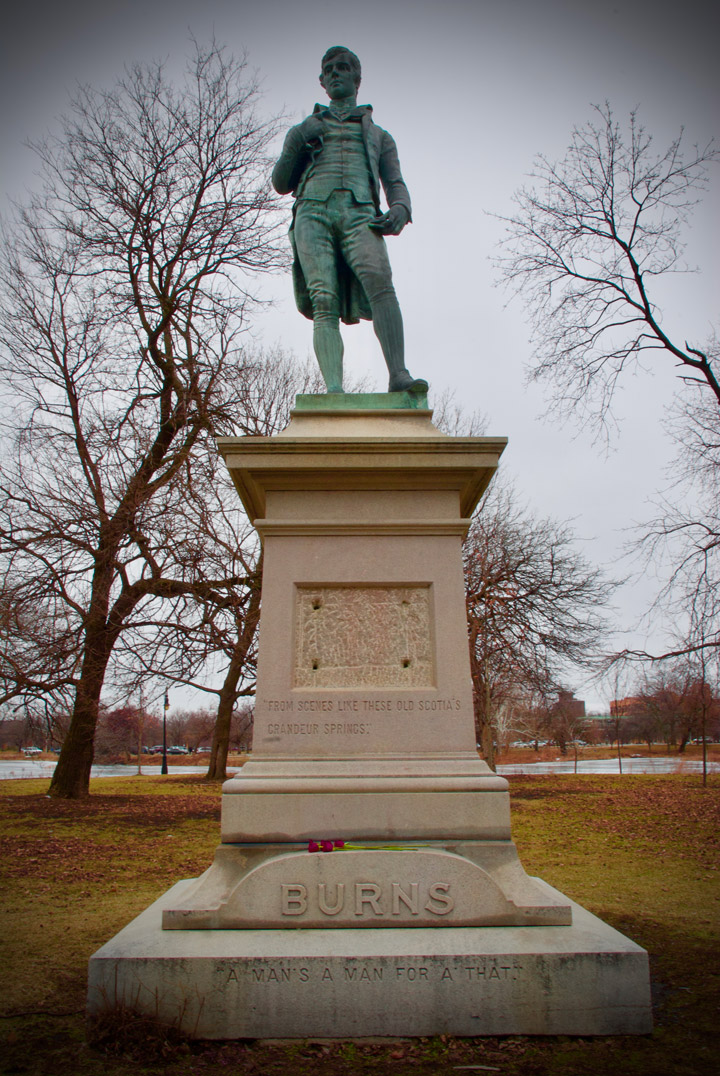
Restoring the Missing Reliefs
Work is already underway on restoring the four missing bronze relief panels that depict scenes from some of Burns’ best works including:
- Cotter’s Saturday Night with the quotation “From scenes like these old Scotia’s grandeur springs.”
- Tam O’Shanter with the quotation “Pleasures are like poppies spread. You seize the flower, it’s bloom is shed.”
- To A Mouse with the quotation “The best laid schemes o’ mice and men gang aft agley.”
- The Twa Dogs, Cesar and Luath, with the quotation “In fair virtues heavenly road, the cottage leaves the palace far behind.”
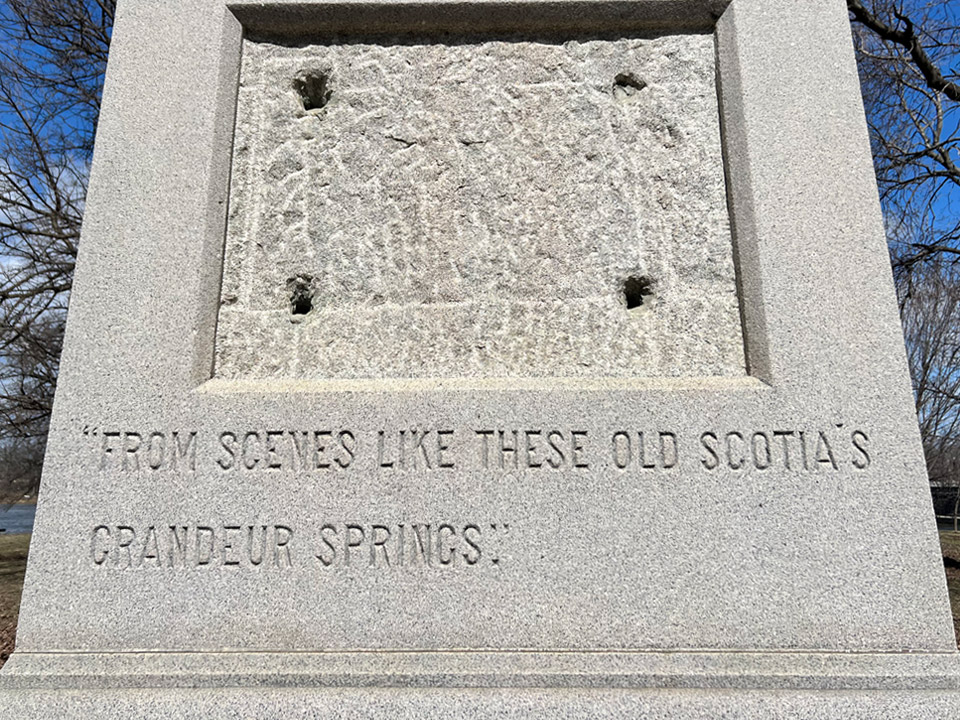
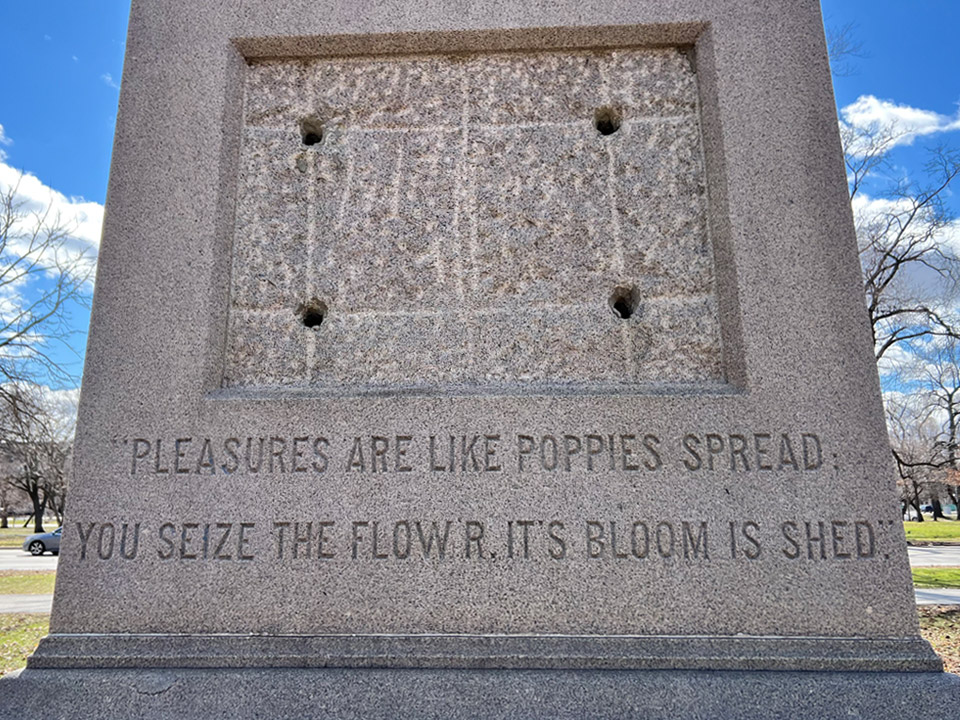
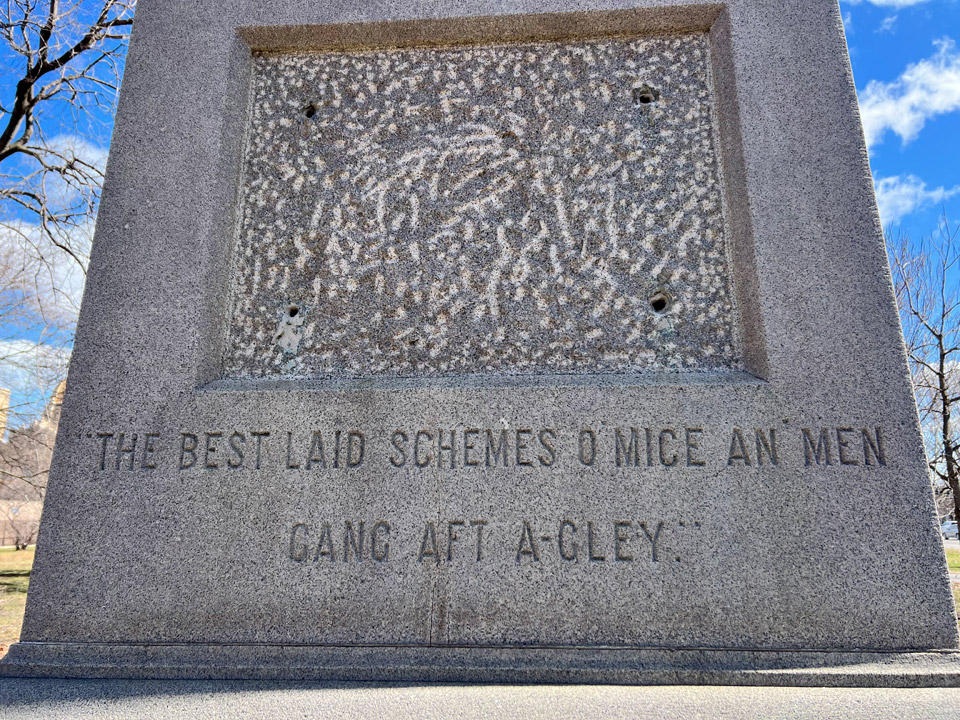
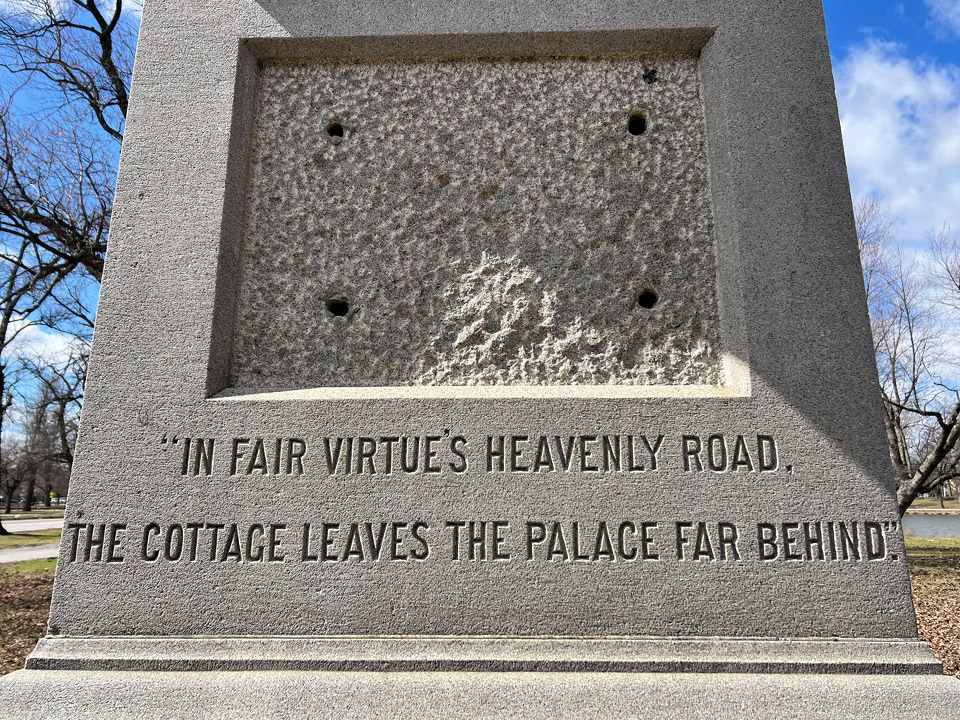
Willam Grant Stevenson made 3 other monuments in North America of Robert Burns (one in Milwaukee, one in Denver and one in New Brunswick, Canada). While the statues are identical, each one stands on a different pedestal. Chicago’s (which was commissioned first but dedicated last due to in-fighting among the Scots of Chicago) is the only one with 4 reliefs, New Brunswick has 3 (Cotter’s Saturday Night, John Anderson, My Jo and Tam O’Shanter), Milwaukee has 2 (Cotter’s Saturday Night and To A Mouse), Denver has none.
Artist Andrzej Dajowski, the city’s go-to restorer, will take exact impressions of Milwaukee’s 2 panels and make molds to recreate the panels for Cotter’s Saturday Night and To A Mouse. We also have some older photos and postcards of the monument (see gallery at the bottom of the page) so Andrzej can recreate the panels based on historic images.
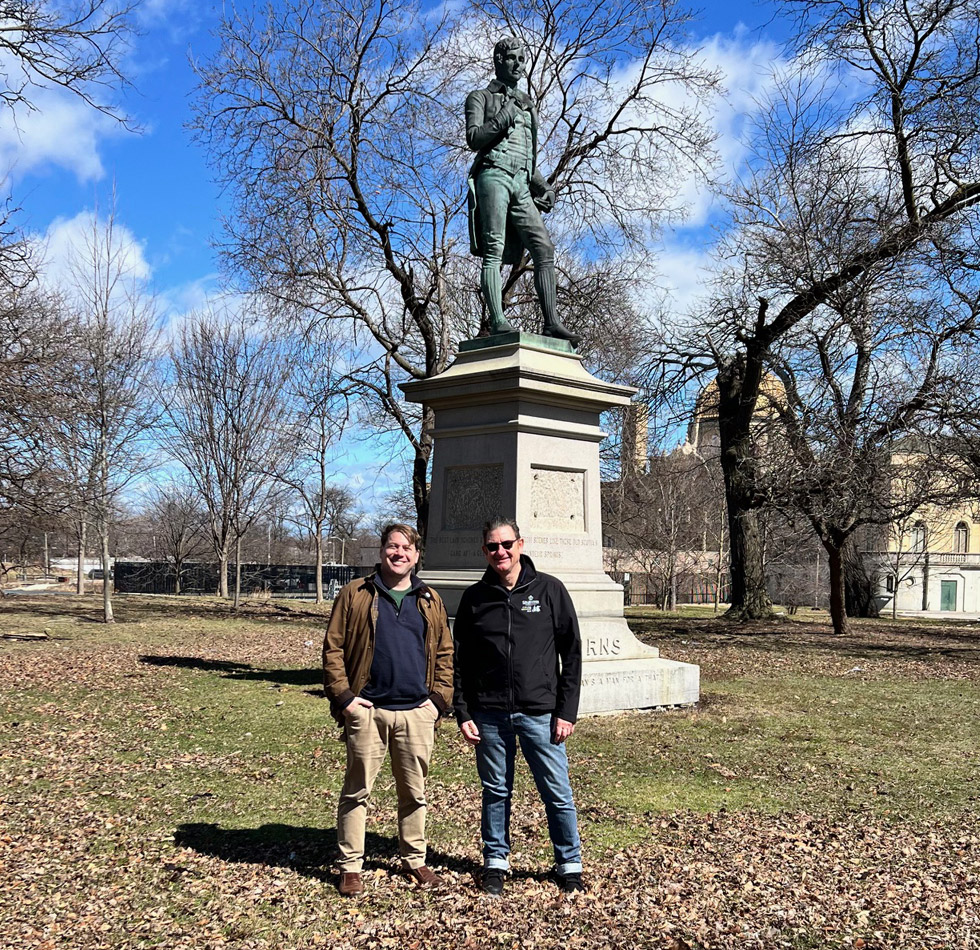
“We are delighted to connect with the Chicago Scots as we restore this important monument in Garfield Park,” said Andrew Schneider, Director of Historic Assets for the Chicago Park District. “The statue of Robert Burns, and our partnership is a reminder that Chicago was built by immigrant communities from its earliest days. It is particularly appropriate to restore the monument of this prominent poet who celebrated the American Revolution and the shared dignity of all people, especially as we celebrate the 250th anniversary of the Declaration of Independence.”
An Historic Campaign for and by the People
Famously, Robert Burns wrote about the everyday lives and experiences of ordinary folk. So, it is very fitting that the statue was made possible because of the working men and women of Chicago’s Scottish community, who rallied together and each gave what they could. Their ambitious, egalitarian goal was to raise one dollar per person ($1 in 1906 is equivalent to $36 today).
The Stramash that Almost Shelved the Project
A Burns Memorial and Monument Association was formed in the 1880s to make the monument a reality. By the time the sculpture was nearly completed in Edinburgh, the association had raised almost enough to cover the costs of the monument, the equivalent of more than $350,000 in today’s money. Yet $3,000 remained to be raised, and the Scottish community’s male leadership of the time disagreed on how to close the gap. When fundraising efforts slowed, William Grant Stevenson stated he would not complete the work until paid in full. The committee’s director, Mrs. Robert (Elizabeth) Ballantine, visited with the artist in Scotland and arranged for payments to be made. The project may well have stalled were it not for the women of our Scottish Society, especially Elizabeth Ballantine, who stepped forward, cut through division, and carried the project over the finish line.
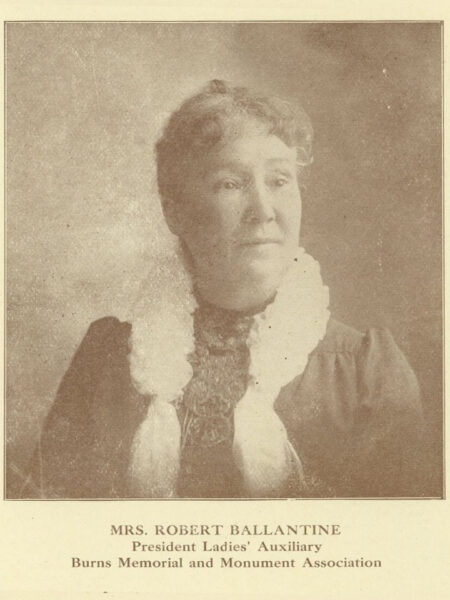
The Champion Who Placed the Statue
Another champion was Jens Jensen, the visionary Superintendent of the West Park System. Jensen insisted that Burns should not stand along a busy boulevard where “only the automobiles of the rich whisked past,” but rather in Garfield Park, “amid the trees and flowers which Burns loved.” Thanks to his steadfast vision, the statue stands in a place that reflects the poet’s own reverence for nature and beauty.
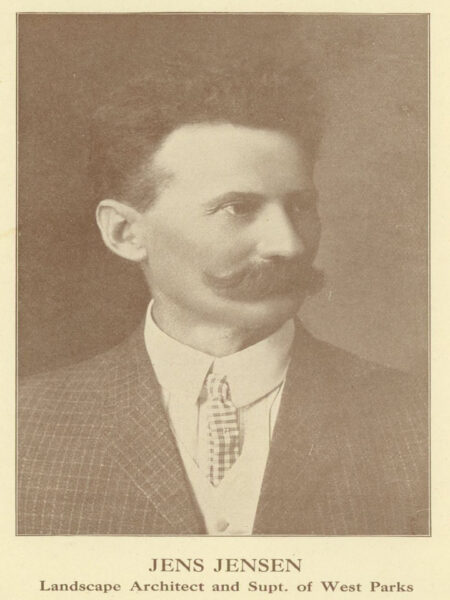
A Grand Celebration in 1906
In 1906, Chicago dedicated the monument with great pageantry: pipe bands, Highland dancers, choirs, a horse‑drawn carriage parade, an evening concert, and speeches from the Mayor of Chicago and the Governor of Illinois. Andrew Carnegie himself sent a message for the occasion. To read this message, please take a look at the beautiful program from the 1906 dedication below.
A Deeply Personal Reflection
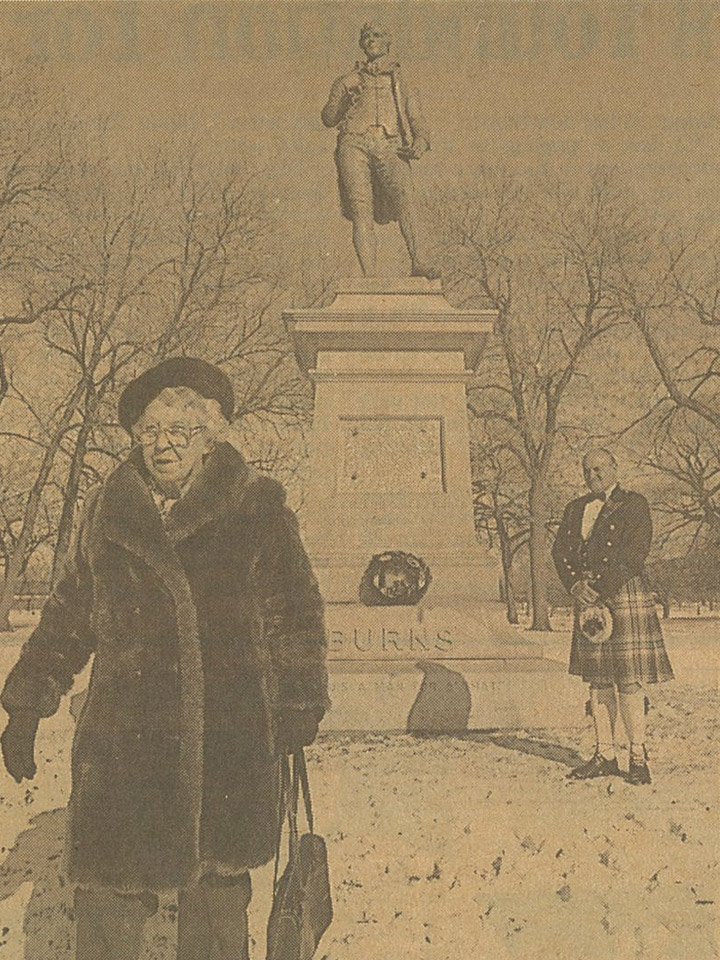
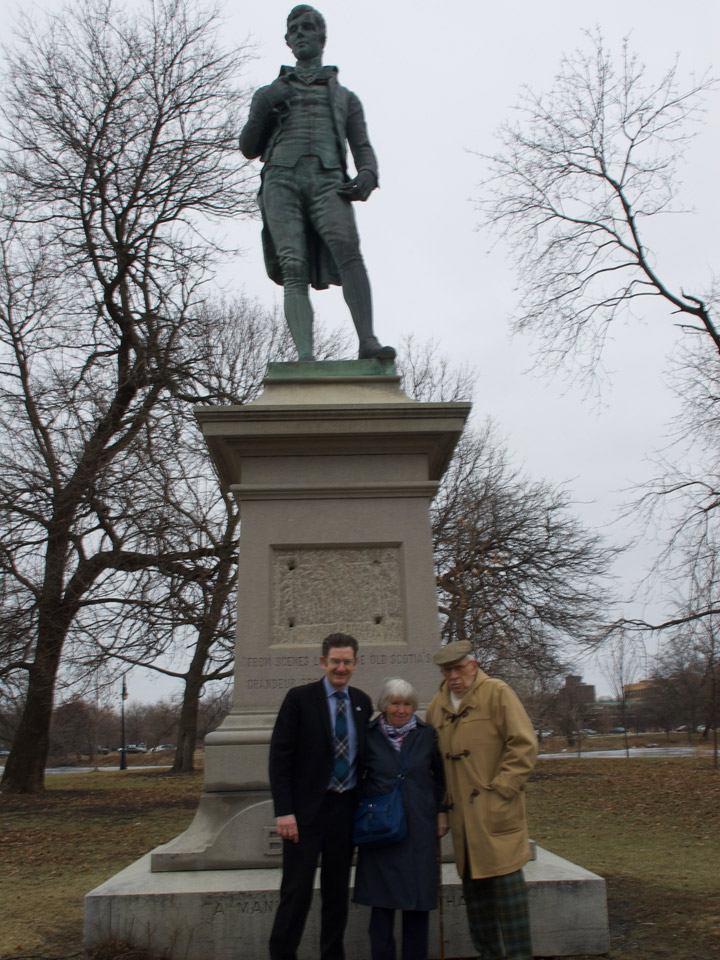
For Gus, president of Chicago Scots, the project is deeply personal. “My friend and predecessor Wayne Rethford told me about his tradition of taking residents of the Scottish Home to the statue on Burns birthday each January to lay red, red roses at the monument. I’m very pleased to say we’ve kept that tradition going” said Gus. “Every year, the residents and I visit Rabbie together. I’ll never forget the year a resident told me, ‘Burns was the first poet I ever understood. He spoke the way my father spoke.’ In that moment, I realized just how deeply the statue belongs not only to our past, but to the living hearts of our community today. Moments like this remind us that we are part of a long, unbroken story.”
Stewardship for the Future
The first page of the 1906 dedication program says the Robert Burns monument “offers not only a feast of art, but a treasure of wisdom, that “will point a moral and adorn a tale” for future generations and be an enduring credit to the Scottish Americans of Chicago.” We are the future generation.
Let us restore and protect this monument to honor the people who made it possible, the poet who continues to inspire us and the generations to come. Let us ensure that when future generations visit, they see not simply a statue, but a story – our story.
Just as the Scottish community did in 1906, let us come together. Let each one of us give what we can. If we each give the 2026 equivalent of the $1 our forebears gave in 1906, that’s $36. If you can afford more, please consider it.
Thank you for your interest in Chicago’s Robert Burns monument. Watch this space for details on the August rededication.
“Now’s the Day and Now’s the Hour.”
— Robert Burns
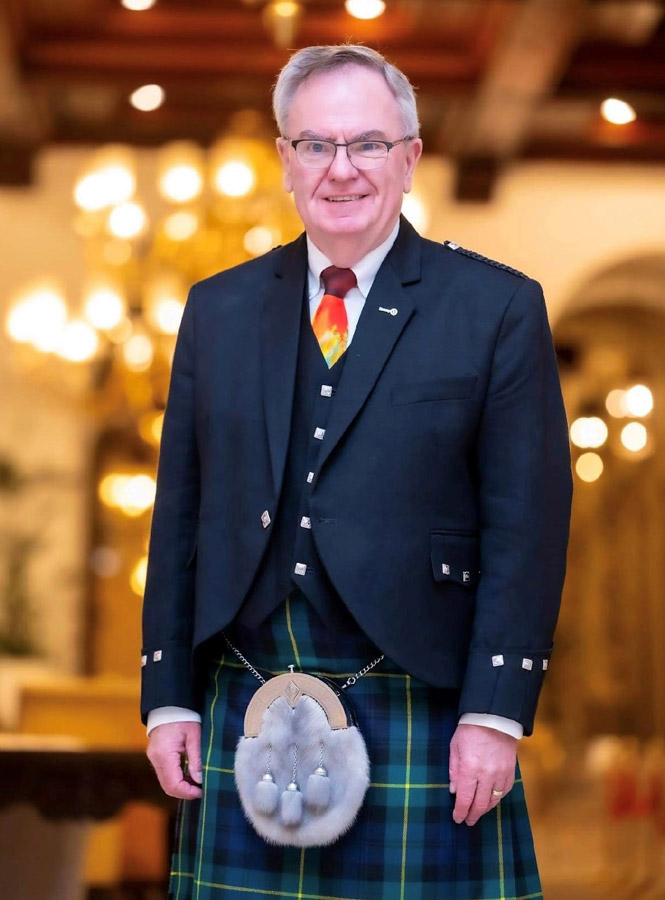 Every year at our Scottish Festival & Highland Games, the Chicago Scots feature a family or an organization as our Honored Clan. This year, to recognize and celebrate its’ strong Scottish roots, our Honored Clan is Rotary International. We are proud to announce that Rotary International’s Scottish President, Gordon McInally has agreed to lead our Parade of Tartans at 12:30 p.m. Gordon will also receive the Salute to the Chieftain from the Massed Pipe Bands at approximately 6.30pm on Saturday, June 15, 2024.